Description
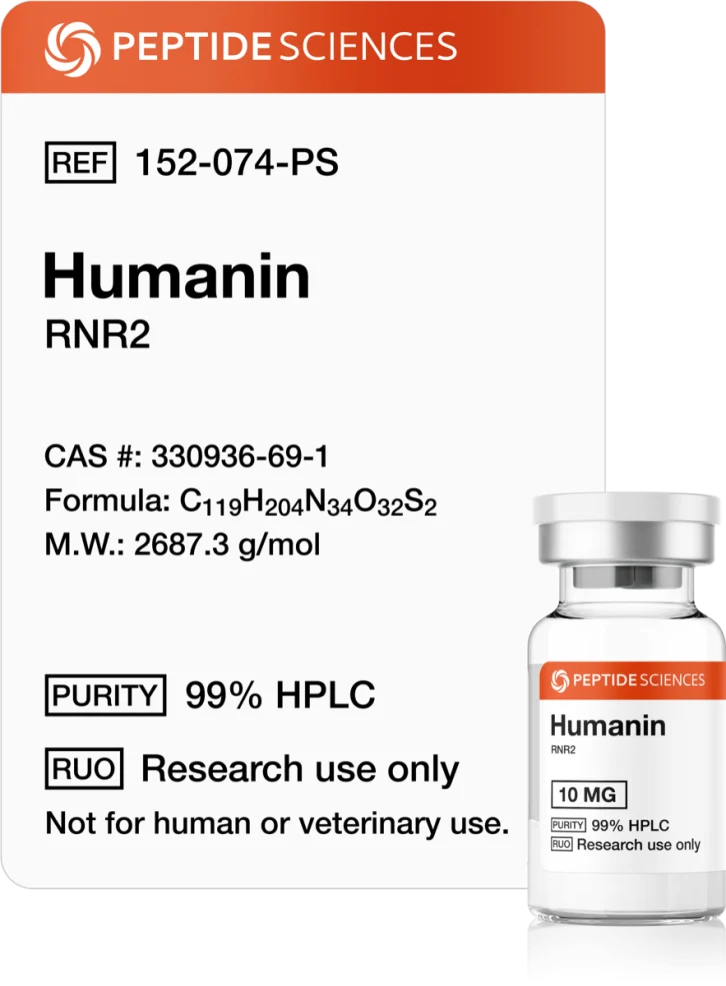
Humanin is a mitochondria-derived micropeptide (24 amino acids) studied for its cytoprotective role in cellular stress response. In research settings, Humanin is evaluated for its ability to modulate apoptosis-related signaling, oxidative stress markers, and inflammatory mediators in neuronal, vascular, and metabolic model systems. Mechanistic studies indicate Humanin can influence mitochondrial integrity and cell-survival pathways by interacting with BCL-2 family signaling (including Bax-associated cascades) and by engaging membrane receptor complexes linked to pro-survival transcriptional programs.
Humanin research also explores effects on metabolic regulation, including insulin signaling and IGF-1–associated pathways, alongside endpoints such as glucose tolerance, insulin sensitivity proxies, and lipid-related readouts in controlled models. Neurobiology studies frequently assess Humanin in paradigms relevant to proteotoxic stress (e.g., amyloid-related injury models) to characterize impacts on synaptic integrity, excitotoxicity markers, and programmed cell death. Because endogenous Humanin levels appear to change with age and disease states, it is also investigated as a potential biomarker of mitochondrial health in experimental and translational research contexts.
For research use only. Not for human consumption.
References:
Hashimoto Y et al., Nature, 2001;422(6932):880–884
Muzumdar RH et al., Science, 2009;323(5917):1029–1033
Guo B et al., J Biol Chem, 2003;278(7):4811–4819

Reviews
There are no reviews yet.