
Description
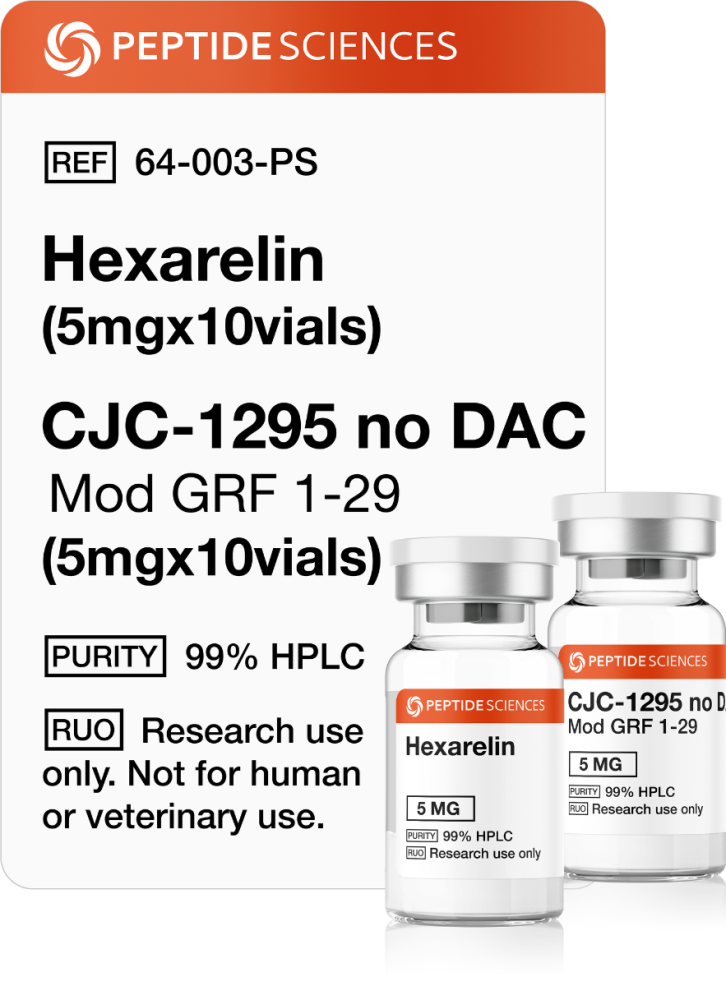
Hexarelin is a synthetic hexapeptide growth hormone secretagogue that functions as a ghrelin receptor (GHS-R1a) agonist and is studied as a ghrelin-mimetic research compound. Hexarelin peptide research commonly examines receptor binding and downstream signaling in endocrine and cardiovascular experimental systems, including models used to study cellular responses to metabolic stress and reduced oxygen or nutrient availability. In laboratory settings, hexarelin is often evaluated for its effects on cardiomyocyte signaling pathways, oxidative stress markers, and programmed cell-death indicators, alongside matched control groups.
Additional research uses include skeletal muscle biology models where investigators measure changes in proteolysis-related markers, mitochondrial function readouts, and muscle fiber gene-expression profiles under stress conditions. Metabolic research may also assess lipid-associated endpoints such as circulating triglycerides, cholesterol fractions, and related gene-expression changes in animal models of insulin resistance. Together, these study areas help researchers characterize how ghrelin-receptor agonism can influence cell-survival signaling, tissue remodeling markers, and systemic metabolic readouts under controlled experimental conditions.
For research use only. Not for human consumption.
References:
Camanni F et al., J Endocrinol Invest, 1998 21(9):646–654
Broglio F et al., J Clin Endocrinol Metab, 1999 84(9):3276–3280
Ghigo E et al., Eur J Endocrinol, 2001 145(1):1–10
Reviews
There are no reviews yet.